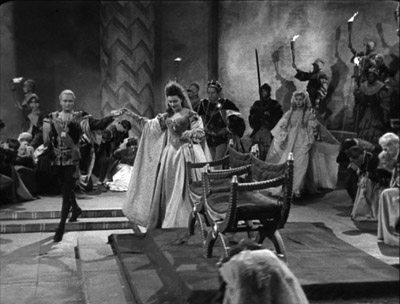
The Brilliance of Tom’s movie-making can be seen from how well Dream in Hanoi shows the cultural conflict between a multicultural team. The Asia Society in the US has taught Dream in Hanoi American students before their scholarships to study in Asia. Moreover, the US government has used Dream in Hanoi to train diplomats for Asian countries [2]. Furthermore, Dream in Hanoi helped Vietnamese understand Americans. For example, when Tom screened Dream in Hanoi for the Vietnamese theatre company members, Tom said Viets first time saw that Americans cry and are soft inside [2] even though they look and talk as if they only care about work, success, and efficiency. The feeling of Vietnamese actors towards Americans “changed after watching Dream in Hanoi” [2].
In a fan’s eyes, Dream in Hanoi shows a real-life story of Lorelle Browning’s “determination” (English and Peace Studies Professor, co-producer and dramaturg), Allen Nause’s “professionalism” (co-director), Doan Hoang Giang’s authority and teachings (co-director), Do Doan Chau’s leadership (co-producer and designer), Doug Miller’s “go with the flow character” (Lysander), Kristen Brown’s American feminism (Helena), Stephanie Mulligan’s union work ethic (stage technician), Cendrine De Vis’s love (marketing manager), Ngan Hoa’s making history by kissing on the stage (Hermia), and Do Ky’s masculinity and fight to save his face (Demetrius).


Lorelle sits on an emotional roller coaster in Dream in Hanoi. First, she was really sad and mad when six servants for Puck as a Vietnamese Cheo Theatre element were added to the play regardless of her opinion that they “demystify” [1] Shakespeare’s world of ferries. Later, Mr. Giang proposed to cut from the Vietnamese lines since even though actors were already rushing through the lines, the play was longer than two and a half hours. It drew Lorelle crazy again since she cut 400 lines from the play already and thought cutting more would destroy the “wonderful and powerful” [1] story of Shakespeare. She argued, “it is not about information. It is about what happens on that stage between human beings,” [1] hitting on her forehead and crying.
As a consequence, Lorelle is reviewed “too rigid in directing this adaptation” by Carlos Uribe ’21, “anxious about cultural exchange and cultural contamination” by Caroline Crider ’20, “intense, almost religious reverence to...the original script...unwilling to adapt and cut out parts of the play as necessary to fit this unique production” by Finn Lorenz ’21, “the cliche ‘universality’ argument...ignoring (and perhaps belittling) the cultural context and the Vietnamese audience” by David Rubin ’21, “expected to have total control over the play and were fine with collaboration in name only…[and] Western supremacy by the dismissal of traditional Vietnamese techniques” by Isabel Anderson ’22, and “Western supremacy … colonialist ideals” by Joaquin Grace ’20 at Carleton College on quiz 2 of English course Global Shakespeare on the Spring 2020 term at Carleton College. I found a different answer from my research in which I interviewed Tom Wiedlinger, Kristen Brown, Stephanie Mulligan, and Allen Nause from Dream in Hanoi.
I summarise that why Lorelle fought to have A Midsummer Night’s Dream as pristine as possible can be understood if we understand how her academic background and lack of experience in the real theatre production influenced in her actions, why she felt “unbalanced” as Tom described, and Lorelle’s relationship to the project, which resulted in a founder’s syndrome defined in the startup communities.
Lorelle’s relationship to the Vietnam and Shakespeare
In an interview with me, Tom Weidlinger said he was "initially pessimistic" when he heard about Lorelle's project cooperating with the Vietnamese theatre company. First of all, it was a communist country that had ideology different from what Americans stand for or used to. Tom agreed that American actors, to a certain degree, thought Viets would hate them for being Americans due to the memory of the Vietnam war.


Having theatrical cooperation between Yankees and Viets sounded difficult in the prevailing sentiment. But Lorelle told herself, “I have to do it” and made it happen. In an interview with me, Kristen Brown said, “Lorelle was determined and got a lot done.” She raised money and brought the Vietnamese theatre company to tour in the States, therefore, gained goodwill from and trust of Vietnamese Theatre in 1998. She worked hard for five years since Vietnam opened its embassy in San Francisco to gain approval from the Vietnamese Ministry of Culture and Information to have theatrical cooperation between the US and Vietnam. Then when she finally won permission, she put together the American team to go to Vietnam in 2000. She also convinced renowned Vietnamese intellect, Dr. Nghi, to translate the A Midsummer Night’s Dream. She worked with the Vietnamese team that didn’t speak English through translators. At the fruition of her work, she watched the opening of A Midsummer Night’s Dream’s opening in Hanoi's Soviet Friendship Palace with a beautiful necklace and dress. On top of that, when Vietnamese theatre declined after the tour in Vietnam to continue the cooperation in the US, she didn’t give up. A year later, she went to Vietnam with Tom, screened Dream in Hanoi for the Vietnamese theatre company actors and directors, and convinced them to tour A Midsummer Night’s Dream in the US.
When I asked why Lorelle was so passionate about Vietnam and Shakespeare, Tom answered that Lorelle's husband was a Vietnam war veteran. Tom explained they wanted to have some form of peace gesture to soften the memory of the devastating war that Americans and Vietnamese had 25 years ago. An interview at Pacific News [11] shows that Lorelle had a much stronger personal reason to heal the painful memory of the war. It says when Lorelle was a student at UC Santa Barbara during an anti-war demonstration, "students and other protesters burned the Bank of America building to the ground." As a consequence, the National Guard arrived, shot down the campus, and installed a curfew for three months. During the National Guard's occupation in the college town, Lorelle lost a close friend, Kevin Moran, her roommates were "clubbed, beaten and dragged away to jail by the police," and "she "was hit in the head with a police baton and pepper-sprayed during a massive demonstration in a park protesting the curfew." The interview finished with Lorelle's own words:
That was my radicalizing moment, despite my being such a novice in political activism...By then, the only moral order in my life — as I watched the sheriffs and National Guard inciting the riots and violence — was Shakespeare. I had a wonderful professor who helped us appreciate the morality and justice Shakespeare explored in his plays. Reading and performing his works gave me hope. [11]
Shakespeare gave Lorelle hope for a better time, peace, and justice. She wanted to bring that to Vietnam to heal not only her pain from the war but also the pain Viets experienced. The proof is that her career centered around Vietnam and Shakespeare. Pacific University said Lorelle taught “American drama and acting techniques at the Hanoi Academy of Theatre and Cinema” and was “the most renowned non-native expert on Vietnamese theatre.” Another proof is that before she fell ill, she was given a second Fulbright grant on Vietnam “to write a book, illustrated by never-before-seen archival photos, about actors who performed war propaganda plays in the jungles amidst ambushes and U.S. bombing strikes during the French and U.S. wars there.” [12]
Lorelle’s life story shows that Lorelle dreamed and planned to bring a pristine Shakespeare to Vietnamese people because that was what helped Lorelle pass through the difficult times during the occupation of the National Guard in her college town.
Lorelle’s lack of experience in the real theatre production before Dream in Hanoi
Tom argued in defense of Lorelle and explained, “fighting to stop America’s participation in the Vietnam war, Lorelle was a liberal who worked among liberals at a liberal arts college’s English department. She was fully aware of cultural differences and difficulties at communicating over cultures. She knew that she would need to overcome them and that she needed to learn the Vietnamese culture well in order to lead the project successfully.” Lorelle’s frustration was not “western supremacy” or “intense, almost religious reverence to...the original script.” She cut 400 lines already from the play. It was her lack of experience in the real theatre production, and she could not constructively channel her frustration productively. For example, Lorelle was not the only person who was frustrated with what Vietnamese partners did to the play. Allen was also frustrated, but he was diplomatic and was able to compromise when he needed to with his real theatre production experiences at home and abroad. Allen said,
It totally took me aback, because it had never been mentioned, never been brought up. Shakespeare didn't write Puck with six servants. He wrote Oberon with one servant, Puck. I had the feeling last night that maybe I was just kinda going through the motions of getting the play on its feet, and he[Mr. Giang] was gonna come in and direct the real play. That made me feel, um, slightly used. But, um, I, I, feel that we've come, we've come to an agreement at least today. But tomorrow I may be surprised again.[1]
Due to her lack of experience in theatre production, Lorelle also gave American team members a hard time. Stephanie Mulligan said that “She drew me crazy sometimes. She trusted me but failed to compromise even though I did not agree. But her passions get the better of her! She learned later in her life how to express that frustration more constructively. Vietnam experience taught her she needed to change and made her a better calibrator and teacher.” Kristen Brown added, “One time, I pulled Allen and told him that Lorelle is out of control and is saying things that are beyond the pale.”
Lorelle’s feeling of being unbalanced due to the way she was provided information about the reality
Tom said, “She acted the way she did in the documentary because she was unbalanced due to inaccurate reality her Vietnamese partners provided to her.” For example, the production team thought they were opening the play at the most prominent Vietnamese Opera House. However, the Ministry of Culture and Information canceled their opening at the Opera House just one week before the opening. It was a shock to the production team. The production team was left without a place to stage its creation. Lorelle’s Vietnamese partners’ promises disappeared. She asks when Allen tries to find a solution, “do we need to continue on this roller coaster when we don’t know what is going to happen tonight?” She states, “I think we do have the option. Tell them that we are leaving.”
The second time, the reality she thought existed turned around when Lorelle learns that they cannot sell tickets for their opening night due to censorship rules, and her Vietnamese partners didn’t tell her even though they knew it from the beginning. Lorelle’s frustration can be seen from Dream in Hanoi:
Somehow not being told and until 30 hours before our opening that we cannot sell tickets to the opening when they have known for months that this was the case was beyond astonishing. I could not believe it. … what I heard when Chau said today is basically: you don't know what you are doing here, you don't really have any business being here, and you sure as hell have known that you have any business telling us how to advertise and sell tickets. I feel really betrayed. [1]
There was a cultural misunderstanding about each other’s intentions. Lorelle’s Vietnamese partners did not explain her reality in the American way, and it made it difficult for her to trust her partners, pushed her to be edgy, and made her act out of distrust and express her fear and despair as anger. Tom explained, “Americans talk looking at each other’s eyes, whereas looking straight in the eyes is considered bad behavior in some other cultures. Americans expected to hear the true situation,” but they didn’t get that in their way. It was the one reason Lorelle was frustrated.
This way of Vietnamese communication did not only make Lorelle’s work difficult. It also made it difficult for Kristen and Allen. Kristen defined Vietnamese handling of sensitive issues, “Vietnamese power is staying calm to protect you. They don’t tell you much. It is not lying or deceiving you. They are just trying to fix it.” Kristen’s frustration in Vietnamese silence on sensitive issues still could be felt when I interviewed her. Kristen repeated emotionally, “I remember I am really wanting to tell them to just tell me what you like and what you don’t like. I just really wanted to have a real conversation: direct question, direct answer with a face value.”
Another support for Vietnamese cultural communication made it not only Lorelle but also other Americans can be seen from Tom remembered Allen saying, “working with Vietnamese is like peeling a layer of onion one after another, you peel each layer thinking you learned the reality on which you can plan your future, but that reality changes when you feel the next layer.”
Lorelle’s founder's syndrome
In the documentary, Shakespeare that Lorelle imagined when she worked on getting approval from the Vietnamese Ministry of Culture and Information was completely blurred by what Vietnamese partners were doing to the play. Lorelle had the right to have the play run in the way she wanted because she was the project founder and because she raised the money for the project. Also, Lorelle studied to understand what Shakespeare meant throughout her youth until Lorelle earned a Ph.D. Therefore, she had the qualification to teach everyone in the production team what Shakespeare is when she argued against six servants for Puck or cutting any more lines after cutting 400 lines. Unfortunately, Lorelle had no power whatsoever in the ultimate production decision, and it made her try to experience power in only an avenue she could control, which was Shakespeare. Tom said, "there was not anyone from the US embassy who helped Lorelle and made things happen for Lorelle." Lorelle was there because she asked to come and because the Vietnamese Theatre company allowed it. Lorelle was in someone's house, none of which she owned, but she worked hard to become an insider or lead the project to where she started.
Conclusion
Tom said, “Lorelle’s character is either hated or loved, “which is great because people get to make their opinion. Stephanie concluded our interview, “Movie has a point of view, it shows a conflict and resolution in the end. But if you look at the bigger picture, the project was not about conflict but cooperation.”
Aside: interview summary with Allen Nause, showing there was more cooperation than conflict
International Shakespeare’s work requires patience and working-and-learning. From trips into the Middle East in the 1980s, I learned that even though there is a language barrier, if I communicate what I want out from characters, actors can bring the “characters come to life.” It was fundamentally and philosophically possible because Shakespeare plays are universal in theme. It deficits what many people go through in life. For example, in A Midsummer Night’ Dream, we see young people falling in love with each other but finding it difficult to win the love of the other person. You people ask, “how do you make [love] work?” It is a common theme in people’s lives all around the globe.
At bringing Shakespeare on an international stage, people come with their “objectives.” Every project has obstacles. In the case of Dream in Hanoi, there was a conflict too. But Lorelle ultimately believed in the project. She loved Mr. Chau. Mr. Giang invited my original staging of A Midsummer Night’s Dream, such as where actors come from and where they stop. Then he tuned it for the Vietnamese audience, and I made suggestions. We had different training. “Vietnamese character types were highly stylized” whereas I brought in “Realism” and sought ways to adapt the play into the culture and time. Our actors had exercised for breathing, voice warming, and helping actors to explore their physicality. On the other hand, Vietnamese actors had their dancing and singing training. There was an exchange of knowledge and expertise. One example of theatre difference was, in America, we kiss on the stage, and the audience expects it. We could have had a super intimate kissing scene without ever touching the actors’ lips in Vietnam. But we chose to have a kissing view, and the actors were “okay” about it. The more significant issue was Kristen didn’t want to act “a sweet little girl” and “stylized stereotype.” She tried to play a “real person” and a “woman” who is “down-to-earth and does things to get what she wants.” Eventually, we came together and found a place between our interests by compromising without losing our beliefs.
Aside: Methodology
I interviewed the American members of the production and wrote down notes by hand. I could not write down what they told me precisely. I wrote down notes to remind me of the crucial points mentioned in the interview. In this paper, I wrote what the production members said in my words to convey what they told me, giving keen attention to keeping the words that I wrote down in the notes.
Reference
Weidlinger, Tom., and F. Murray. Abraham. A Dream in Hanoi. Bullfrog Films, 2002.
Weidlinger, Tom. Personal correspondence. May 31, 2020.
Brown, Kristen. Personal correspondence. Jun 6, 2020.
Mulligan, Stephanie. Personal correspondence. Jun 7, 2020.
Nause, Allen. Personal correspondence. Jun 7, 2020.
Weidlinger, Tom.Thirty year of Public Television films by Tom Weidlinger. Retrievable from https://www.moiraproductions.com/about/
Google Books. The Restless Hungarian. Retrievable from https://books.google.com/books/about/The_Restless_Hungarian.html?id=kRbPtwEACAAJ
Laura Paull. When the international man of mystery is your own father. Oct 2019. Retrievable from https://www.jweekly.com/2019/10/30/when-the-international-man-of-mystery-is-your-own-father/
Oland, Dana. Longtime Idaho Shakespeare Festival actor dies after a short battle with rare cancer. May 2018. Retrievable from https://www.idahostatesman.com/latest-news/article211135234.html
Weidlinger, Tom. Profiles of the principal artists. Retrievable from https://www.adreaminhanoi.com/people/artists.html
Laukkanen, Wanda. Experiences shape professor’s viewpoints. May 2014. Retrievable from https://nanopdf.com/download/experiences-shape-professors-viewpoints-by-wanda-laukkanen-pacificuedu-inside_pdf
Lang, Joe. Professor Lorelle Browning Receives Second Fulbright Research Scholar Grant. Apr 2014. Retrievable from https://www.pacificu.edu/about/media/professor-lorelle-browning-receives-second-fulbright-research-scholar-grant
Bullfrog Films. A Dream In Hanoi. Retrievable from http://www.bullfrogfilms.com/catalog/adih.html
Obituaries. Dr. Lorelle Browning. The Oregonian. Jun 2015. Retrievable from https://obits.oregonlive.com/obituaries/oregon/obituary.aspx?n=lorelle-browning&pid=175056574
Sullivan, Julie. The Oregonian. Portland's KBOO Veterans' Voice show bonds two vets of different eras, same politics: Story of Marvin Simmons, husband of Lorelle Browning. Apr 2011. Retrievable from https://www.oregonlive.com/portland/2011/04/kboos_veterans_voices_radio_sh.html
Bag&Baggage Productions. Lorelle Browning Memorial Lounge. Retrievable from https://bagnbaggage.org/capital-campaign/browning-memorial/
Townsley, Nancy. Vietnam expert, 'loving colleague' dies at 64. May 2015. Retrievable from https://pamplinmedia.com/fgnt/36-news/259486-130633-vietnam-expert-loving-colleague-dies-at-64
The Pacific Index. Professor leaves strong impact on Pacific. May 2015. Retrievable from https://www.pacindex.com/news/2015/05/07/professor-leaves-strong-impact-on-pacific/
Eisner, Ken. A Dream in Hanoi. Jul 2002. Retrievable from https://variety.com/2002/film/reviews/a-dream-in-hanoi-1200547135/
Johnson, Barry. The Inveterate Traveler Allen Nause. May 2013. Retrievable from https://www.americantheatre.org/2013/05/01/the-inveterate-traveler-allen-nause/
Johnson, Barry. Jon Kretzu looks back fondly at his Artists Rep years. Jan 2013. Retrievable from https://www.orartswatch.org/jon-kretzu-looks-back-fondly-at-his-artists-rep-years/
Arts Rep. Allen Nause. Retrievable from https://artistsrep.org/artists/allen-nause/
- Hughley, Marty. Artists Rep's Allen Nause announces plans to retire as producing artistic director. Jan 2012. Retrievable from https://www.oregonlive.com/performance/2011/12/artists_reps_allen_nause_annou.html
Frochtzwajg, Jonathan. Artists Rep Picks New Artistic Director. Jun 2012. Retreivable from https://www.pdxmonthly.com/arts-and-culture/2012/12/artists-rep-picks-new-artistic-director
Bartels, Eric. Hurts so good all over again. Dec 2006. Retrievable from https://pamplinmedia.com/component/content/article?id=107035
Vondersmith, Jason. Staging a bold move. March 14, 2013. Retrievable from https://pamplinmedia.com/pt/11-features/129947-staging-a-bold-move